 VapeWholesaleHub
Seasonal Planning for Nicotine Level Inventory — Multi-Warehouse Networks
Buyers often ask us to explain why two nicotine level samples that look identical behave differently after a month. The answer is almost always tolerance control, and it is more interesting than it sounds.
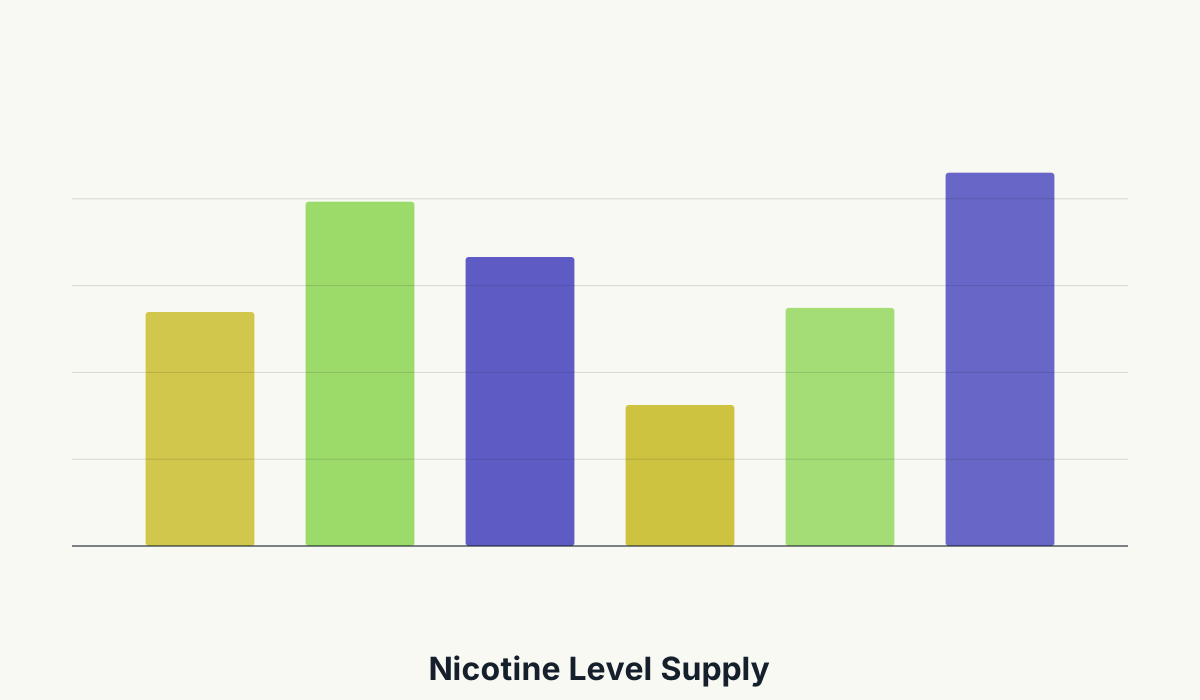
Where Nicotine Level Sits in the Range
Nicotine Level sits at an interesting point in the assortment. It is familiar enough to be an impulse purchase and specific enough to build a repeat pattern around. Treating it as either pure commodity or pure specialty both lead to poor results.
What to Fix Before Approving Nicotine Level
Specification sheets are where a nicotine level deal is won or quietly lost. Two samples can look and taste the same while using different coil wire, different wicking density and different tolerances on the mouthpiece. Those details decide how the unit behaves in week three rather than minute three.
| Product category | Disposable |
|---|---|
| Resistance band | 0.8 - 1.0 ohm |
| Capacity tolerance | +/- 2% |
| Puff count method | Machine cycle 2s on / 18s off |
| Master carton | 120 units |
| Carton weight | 12.6 kg |
| Shelf life | 24 months |
| Storage | 15-25 C, dry, away from direct light |
How Nicotine Level Batches Are Checked
AQL sampling gets a lot of attention, but for nicotine level the more useful habit is simply measuring the same three things on every single batch. Trend lines catch problems that pass/fail checks miss.
Random checks are fine, but weight the sample towards the start and end of a nicotine level production run. Those are where a line is most likely to drift.
- Start with a mixed carton and let your own sell-through decide.
- Rotate stock by batch code rather than by delivery date.
- Check carton dimensions against your freight quote before confirming.
- Confirm the current customs classification with your own broker.
- Ask how the factory measures puff count, then compare like with like.
Getting Nicotine Level to Your Warehouse
Consolidating nicotine level with other lines is often the biggest single saving available to a mid size importer. The unit cost does not change but the landed cost does, sometimes materially.
Split nicotine level shipments across two sailings when the order is large enough. It costs slightly more but removes the risk of a single event wiping out a full quarter of stock.
Selling Nicotine Level at Store Level
A nicotine level display that answers strength and flavour without staff involvement outsells a prettier one that does not. Most customers will not ask, so the fixture has to do the work.
Modelling a Healthy Margin
Hold a small nicotine level buffer in your pricing model for currency movement. A few percent on a container is a real number, and it is easier to plan for than to absorb.
Hold a small nicotine level buffer in your pricing model for currency movement. A few percent on a container is a real number, and it is easier to plan for than to absorb.
Indicative reference points for planning purposes: entry tier from USD 1.43 per unit at 500 units, mid tier at USD 1.81, and volume tier at USD 1.46 for full container quantities. These figures move with specification, packaging and freight, so treat them as a shape rather than a quote.
Practical Checklist
- Keep sealed retained samples from every production batch.
- Plan the switch from air to sea freight before you need it.
- Ask how the factory measures puff count, then compare like with like.
- Confirm the current customs classification with your own broker.
- Rotate stock by batch code rather than by delivery date.
- Start with a mixed carton and let your own sell-through decide.
Frequently Asked Questions
How long does a nicotine level order take to arrive?
Production typically takes ten to eighteen working days after artwork approval, and transit depends on the method you choose. Air express is fastest, sea freight is cheapest at volume. We confirm both at quotation so there is no surprise later.
What information do you need to quote?
Target specification, approximate quantity, destination and any packaging requirement. With those four we can usually come back with a costed option the same working day rather than a request for more information.
What if I only need a small first order?
That is normal and sensible. A mixed carton lets you test nicotine level in your own market before committing to a production run, and the specification you approve at that stage carries through to larger orders unchanged.
How are price changes handled on repeat orders?
{K} pricing is reviewed against input costs and volume rather than adjusted casually. Any change is confirmed in writing before the next order is scheduled, with the reason stated so you can judge it yourself.
Do you hold stock for regular customers?
For established programmes we can reserve production slots and, in some cases, hold finished nicotine level stock against a forecast. It removes most of the lead time risk from a reorder and is worth discussing once volumes are stable.
Next Step
Whatever you decide, decide it against numbers you can check on arrival. That single discipline removes most of the risk from importing nicotine level.
Related Reading
- Nicotine Level Damage Claims and How to Avoid Them — the Buying Desk
- Nicotine Level Copy That Answers Buyer Objections — Established Chains
- Nicotine Level Packaging Refresh Without Losing Recognition — Small Batch Buyers
- Nicotine Level Insurance and Cargo Cover Explained — Repeat Orders
- Nicotine Level Component Sourcing Behind the Finished Unit — a Printable Checklist
- Pricing Nicotine Level for Healthy Retail Margins — Convenience Retail