 VapeWholesaleHub
Nicotine Level vs Standard Alternatives: What Changes for Your Shelf — Warehouse Teams
Treat nicotine level as a repeat purchase category rather than a one off buy. That single change in framing alters almost every decision downstream, from carton size to how many strengths you list.
How Nicotine Level Batches Are Checked
Train whoever receives nicotine level cartons to note anything unusual at the point of unloading. Damage discovered at the dock is a freight claim; damage discovered a week later is your problem.
- Start with a mixed carton and let your own sell-through decide.
- Rotate stock by batch code rather than by delivery date.
- Confirm the current customs classification with your own broker.
- Ask how the factory measures puff count, then compare like with like.
- Write the complaint threshold into the order terms.
Merchandising and Listing Tips
Put nicotine level where the decision is made, not where the margin is highest. In most stores that means near the counter or at eye level in the category, rather than wherever there is spare space.
Online, the listing for nicotine level should answer three questions without scrolling: what it is, how strong it is, and what it tastes like. Everything else belongs further down the page.
Positioning Nicotine Level on Your Shelf
Category planning for nicotine level works best when you map it against three shopper types: the restocker who already knows what they want, the switcher who wants something stronger, and the explorer who buys on flavour name alone.
Think about where nicotine level sits in your customer's week. If it is a weekly restock, breadth matters less than availability. If it is an occasional treat, flavour range and display story carry more weight.
Freight, Customs and Timing
Freight is the hidden half of nicotine level unit economics. A denser master carton can save more per unit than a hard negotiation on factory price, because the saving repeats on every reorder rather than once.
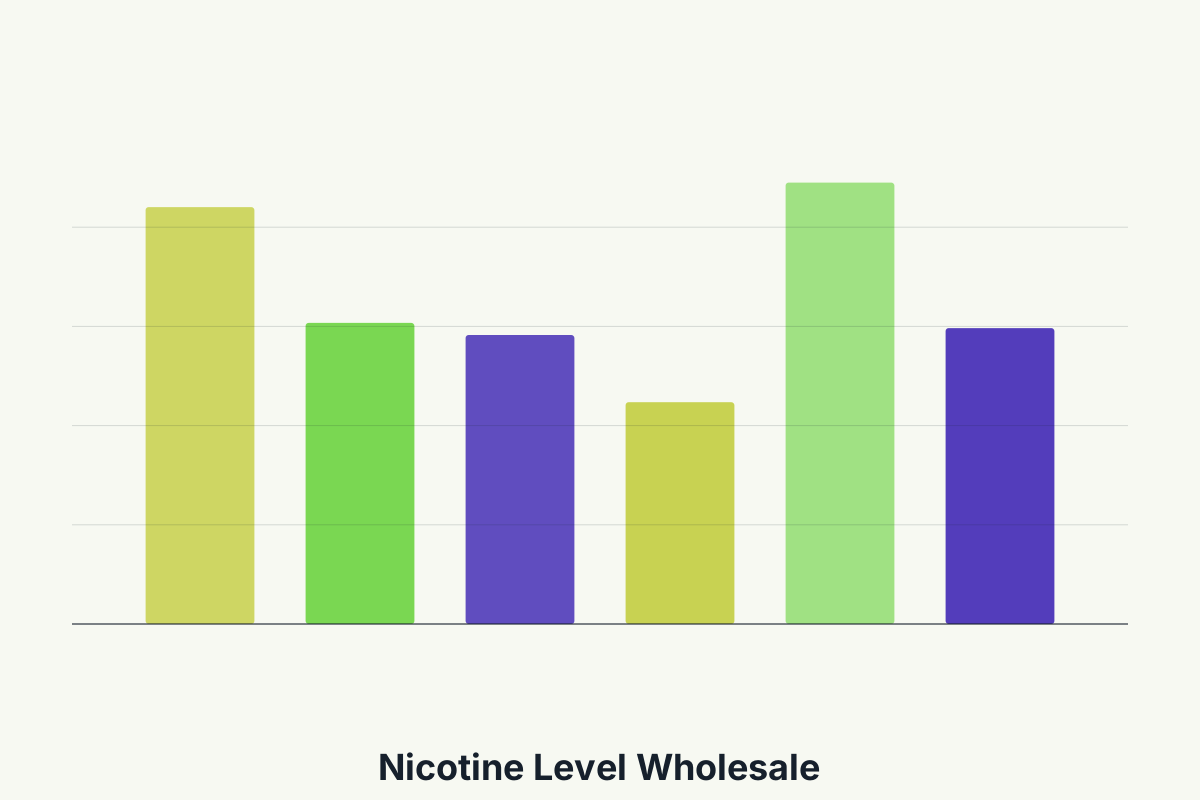
The Specification That Matters
Ask any factory for the same nicotine level sample twice, three months apart. If the second sample drifts, the production line is running without statistical control and your reviews will drift with it. Consistency over time is a more useful signal than a single good sample.
Ask for the nicotine level specification in the same units you intend to measure in. A metric quoted in a form you cannot verify on arrival is not a specification, it is a claim.
| Product category | Disposable |
|---|---|
| Resistance band | 1.0 - 1.2 ohm |
| Capacity tolerance | +/- 2% |
| Puff count method | Declared by capacity |
| Master carton | 240 units |
| Carton weight | 5.3 kg |
| Shelf life | 18 months |
| Storage | 15-25 C, dry, away from direct light |
Pricing and Margin
Hold a small nicotine level buffer in your pricing model for currency movement. A few percent on a container is a real number, and it is easier to plan for than to absorb.
Indicative reference points for planning purposes: entry tier from USD 1.96 per unit at 500 units, mid tier at USD 1.40, and volume tier at USD 0.98 for full container quantities. These figures move with specification, packaging and freight, so treat them as a shape rather than a quote.
Practical Checklist
- Check carton dimensions against your freight quote before confirming.
- Model landed cost, not ex-works price, when comparing quotes.
- Rotate stock by batch code rather than by delivery date.
- Write the complaint threshold into the order terms.
- Agree the tolerance band in writing before approving artwork.
- Keep sealed retained samples from every production batch.
Frequently Asked Questions
How long does a nicotine level order take to arrive?
Production typically takes ten to eighteen working days after artwork approval, and transit depends on the method you choose. Air express is fastest, sea freight is cheapest at volume. We confirm both at quotation so there is no surprise later.
What if I only need a small first order?
That is normal and sensible. A mixed carton lets you test nicotine level in your own market before committing to a production run, and the specification you approve at that stage carries through to larger orders unchanged.
What information do you need to quote?
Target specification, approximate quantity, destination and any packaging requirement. With those four we can usually come back with a costed option the same working day rather than a request for more information.
What happens if my market changes its rules?
Regulations move, and packaging or documentation sometimes has to follow. We keep approved artwork files on hand so that a required change is a reprint rather than a redesign, which keeps the cost and delay down.
Can I visit the production facility?
Yes, and we encourage it for larger programmes. Visits are most useful when you already have a draft specification, because you can then check the specific processes behind the numbers you care about.
Next Step
If you take one thing from this page, take the retained sample habit. It costs a few units per batch and it is the difference between a disagreement and a decision.
Related Reading
- Nicotine Level Emissions and Leak Testing Methods — Multi-Warehouse Networks
- Nicotine Level Staff Training Notes for Store Teams — Oceania
- Nicotine Level Protecting Your Private Label Design — UK and Ireland
- Nicotine Level Trade Credit and Account Terms — the Buying Desk
- Nicotine Level Quality Control: Tests We Run Before Dispatch — Three Price Tiers
- Nicotine Level Slow Moving Stock and Remedial Actions — Busy Buyers