 VapeWholesaleHub
Nicotine Level Promotional Mechanics That Do Not Erode Value — Three Price Tiers
The price difference between two nicotine level quotes is often smaller than the cost of one failed shipment. This overview is written for buyers who would rather understand the failure modes up front than discover them after customs clearance.
Trends Worth Watching
Retailers report that nicotine level customers are asking more specific questions than they did two years ago. That favours ranges with clear, simple information over ranges with clever marketing.
One shift worth planning for: shorter nicotine level reorder cycles with smaller average drops. It favours suppliers with flexible production slots over those who only want large annual commitments.
Logistics That Protect Margin
Air freight makes sense for a first nicotine level order when you need to test demand quickly, but almost every steady programme moves to sea freight once volumes stabilise. Planning that switch early avoids a painful margin squeeze later.
Positioning Nicotine Level on Your Shelf
Range decisions for nicotine level should start from shelf space, not from a supplier catalogue. Count the facings you actually have, then decide how many of them this line deserves against what it currently earns.
What Nicotine Level Really Costs Landed
When nicotine level input costs move, ask which component moved. A generic price increase hides whether you are paying for cells, packaging or simply a busy production calendar.
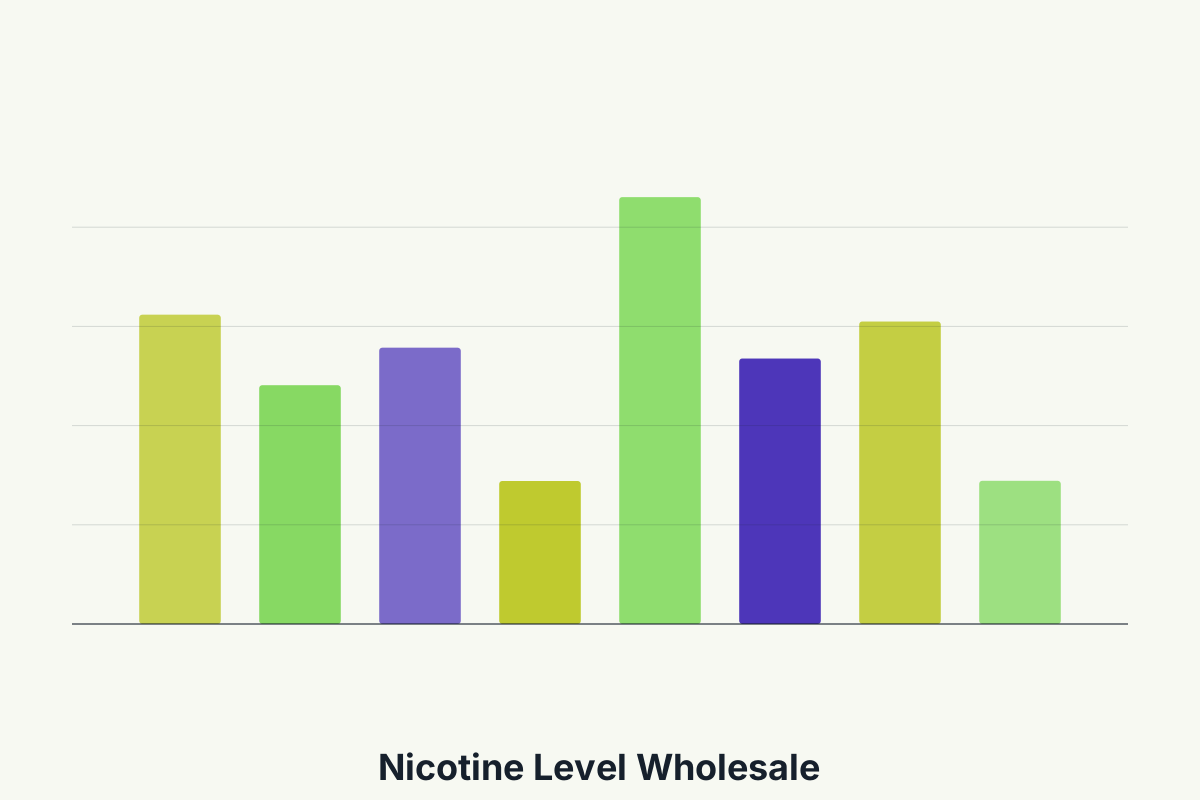
Indicative reference points for planning purposes: entry tier from USD 1.99 per unit at 500 units, mid tier at USD 1.13, and volume tier at USD 1.37 for full container quantities. These figures move with specification, packaging and freight, so treat them as a shape rather than a quote.
The Specification That Matters
Pay attention to how a nicotine level supplier responds when you ask for a tolerance they do not want to commit to. The hesitation is usually more informative than the eventual answer.
Two specifications that matter more than buyers expect: the seal integrity after a drop test and the consistency of the draw from first use to last. Both are measurable before you commit to volume.
| Product category | Closed pod |
|---|---|
| Resistance band | 1.2 - 1.4 ohm |
| Capacity tolerance | +/- 2% |
| Puff count method | Machine cycle 2s on / 18s off |
| Master carton | 100 units |
| Carton weight | 5.5 kg |
| Shelf life | 24 months |
| Storage | 15-25 C, dry, away from direct light |
Quality Control in Practice
The cheapest quality control step is a retained sample. Keeping three sealed units from every nicotine level batch costs almost nothing and turns any dispute into a simple comparison instead of an argument over photographs.
Random checks are fine, but weight the sample towards the start and end of a nicotine level production run. Those are where a line is most likely to drift.
- Start with a mixed carton and let your own sell-through decide.
- Rotate stock by batch code rather than by delivery date.
- Check carton dimensions against your freight quote before confirming.
- Ask how the factory measures puff count, then compare like with like.
- Model landed cost, not ex-works price, when comparing quotes.
Practical Checklist
- Model landed cost, not ex-works price, when comparing quotes.
- Rotate stock by batch code rather than by delivery date.
- Keep sealed retained samples from every production batch.
- Start with a mixed carton and let your own sell-through decide.
- Plan the switch from air to sea freight before you need it.
- Check carton dimensions against your freight quote before confirming.
Frequently Asked Questions
Can I visit the production facility?
Yes, and we encourage it for larger programmes. Visits are most useful when you already have a draft specification, because you can then check the specific processes behind the numbers you care about.
Is there a warranty on nicotine level?
Manufacturing defects are covered against the retained sample standard. Normal wear, misuse and damage after opening are not. We publish the threshold in the order terms so both sides know exactly what the claim process looks like.
How are price changes handled on repeat orders?
{K} pricing is reviewed against input costs and volume rather than adjusted casually. Any change is confirmed in writing before the next order is scheduled, with the reason stated so you can judge it yourself.
What happens if my market changes its rules?
Regulations move, and packaging or documentation sometimes has to follow. We keep approved artwork files on hand so that a required change is a reprint rather than a redesign, which keeps the cost and delay down.
How do you handle a short shipment?
Cartons are counted and weighed before dispatch and the figures are shared with you. If something is short on arrival, the packing record and the carrier documentation are both available, which keeps the claim straightforward.
Next Step
If you are comparing options right now, send us the specification you have been quoted elsewhere. A side by side reading usually shows where the price difference actually comes from, and that is the most useful first conversation to have.
Related Reading
- Nicotine Level Insurance and Cargo Cover Explained — Wholesale Clubs
- Digital Marketing Playbook for Nicotine Level Sellers — High Volume Buyers
- Nicotine Level vs Standard Alternatives: What Changes for Your Shelf — Convenience Retail
- Nicotine Level Humidity Control in Coastal Warehouses — the Middle East
- Nicotine Level Age Verification at the Point of Sale — Regional Distributors
- Nicotine Level Slow Moving Stock and Remedial Actions — Three Price Tiers