 VapeWholesaleHub
Nicotine Level Loyalty Effects in Repeat Categories — Freight Included
The price difference between two nicotine level quotes is often smaller than the cost of one failed shipment. This overview is written for buyers who would rather understand the failure modes up front than discover them after customs clearance.

Market Signals
Expect nicotine level packaging requirements to keep tightening. Designs that leave room for additional labelling age better than tight layouts that need a full reprint to comply.
Assortment rationalisation is the quiet trend in this category. Shops that cut their nicotine level range from twelve lines to five well chosen ones often report higher total sales, not lower.
Modelling a Healthy Margin
Tiered pricing works best when the tiers match real customer behaviour. Most nicotine level buyers will take the second tier if the step is modest and the third tier only if they can see a genuine reason to hold more stock.
Indicative reference points for planning purposes: entry tier from USD 1.53 per unit at 1000 units, mid tier at USD 0.94, and volume tier at USD 0.79 for full container quantities. These figures move with specification, packaging and freight, so treat them as a shape rather than a quote.
Freight, Customs and Timing
Split nicotine level shipments across two sailings when the order is large enough. It costs slightly more but removes the risk of a single event wiping out a full quarter of stock.
Model nicotine level freight both ways before choosing a method: cost per unit and cost per week of delay. The second figure is the one that decides whether a cheap option was actually cheap.
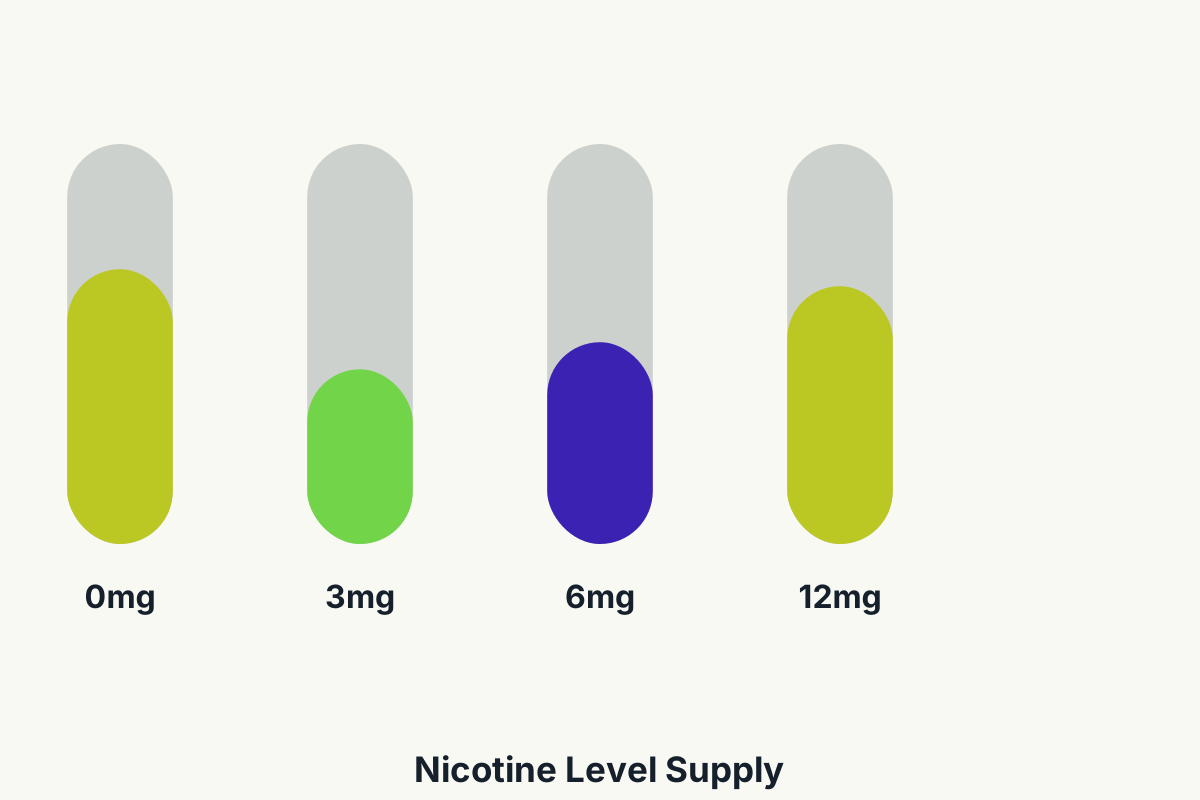
Where Nicotine Level Sits in the Range
A tight nicotine level range with deep availability usually outsells a wide range with thin stock. Customers who find their line in stock come back; customers who are told to wait do not.
One useful exercise: list every nicotine level line you stock and mark the last date each one sold at full price. Anything without a recent full price sale is taking space from something that would use it better.
Reading a Nicotine Level Spec Sheet
Revisit the nicotine level specification after every third order. Small improvements compound, and factories take a buyer more seriously when the document has clearly been used.
Pay attention to how a nicotine level supplier responds when you ask for a tolerance they do not want to commit to. The hesitation is usually more informative than the eventual answer.
| Product category | Pod system |
|---|---|
| Resistance band | 0.6 - 0.8 ohm |
| Capacity tolerance | +/- 2% |
| Puff count method | Declared by capacity |
| Master carton | 100 units |
| Carton weight | 11.4 kg |
| Shelf life | 24 months |
| Storage | 15-25 C, dry, away from direct light |
Practical Checklist
- Keep sealed retained samples from every production batch.
- Model landed cost, not ex-works price, when comparing quotes.
- Ask how the factory measures puff count, then compare like with like.
- Rotate stock by batch code rather than by delivery date.
- Write the complaint threshold into the order terms.
- Plan the switch from air to sea freight before you need it.
Frequently Asked Questions
Can I visit the production facility?
Yes, and we encourage it for larger programmes. Visits are most useful when you already have a draft specification, because you can then check the specific processes behind the numbers you care about.
Can you match an existing product I already sell?
Often yes, provided we can measure it properly. Send a physical sample and we will report back on what can be matched, what will differ slightly, and why. An honest gap is more useful than a vague promise.
How do you handle a short shipment?
Cartons are counted and weighed before dispatch and the figures are shared with you. If something is short on arrival, the packing record and the carrier documentation are both available, which keeps the claim straightforward.
Do you hold stock for regular customers?
For established programmes we can reserve production slots and, in some cases, hold finished nicotine level stock against a forecast. It removes most of the lead time risk from a reorder and is worth discussing once volumes are stable.
Next Step
The best nicotine level programmes we see are run by buyers who write things down. Specifications, batch records, complaint thresholds - the paperwork is the advantage.
Related Reading
- Nicotine Level Sampling Programme: How to Evaluate Before You Commit — Landed Cost Worked Through
- Nicotine Level Humidity Control in Coastal Warehouses — 2026 Buyer Notes
- Nicotine Level First Order Playbook for New Importers — Container-Scale Orders
- Nicotine Level Age Verification at the Point of Sale — Landed Cost Worked Through
- Nicotine Level Sell Through Tracking Without Expensive Tools — a Printable Checklist
- Nicotine Level Copy That Answers Buyer Objections — Cross-Border Trade