 VapeWholesaleHub
Nicotine Level Customer Feedback Loops That Improve Reorders — Repeat Orders
Nicotine Level has moved from a niche listing to a category that most vape retailers simply have to carry. That popularity brought a flood of near identical offers. This guide explains how to separate a repeatable supply chain from a lucky sample.
Where Demand Is Heading
Demand for nicotine level has been steadily rebalancing. The early phase rewarded whoever could ship fastest; the current phase rewards whoever can ship the same thing twice. That shift favours buyers who invest in specification rather than price shopping.
Traceability is moving from a nice-to-have to a requirement in several nicotine level markets. Building the habit now is cheaper than retrofitting record keeping under pressure later.
Pricing and Margin
Build nicotine level price tiers around order sizes your customers actually place. Tiers that only make sense on a spreadsheet get ignored, and you end up discounting ad hoc instead.
When nicotine level input costs move, ask which component moved. A generic price increase hides whether you are paying for cells, packaging or simply a busy production calendar.
Indicative reference points for planning purposes: entry tier from USD 2.13 per unit at 2000 units, mid tier at USD 1.81, and volume tier at USD 1.37 for full container quantities. These figures move with specification, packaging and freight, so treat them as a shape rather than a quote.
Turning Nicotine Level Into Repeats
Bundle nicotine level with a complementary item rather than discounting it outright. The perceived value holds up better and the second item often becomes a repeat purchase on its own.
Use your nicotine level staff training time on the two questions customers actually ask. Anything more detailed gets forgotten by the second shift.
Freight, Customs and Timing
Customs classification for nicotine level varies by market and changes from time to time. We ship with full documentation, but your broker should confirm the current code before your first order rather than after it lands.
Carton dimensions for nicotine level are a design decision, not a packing afterthought. A few centimetres on the master carton can change how many units fit a pallet, and that repeats on every order.
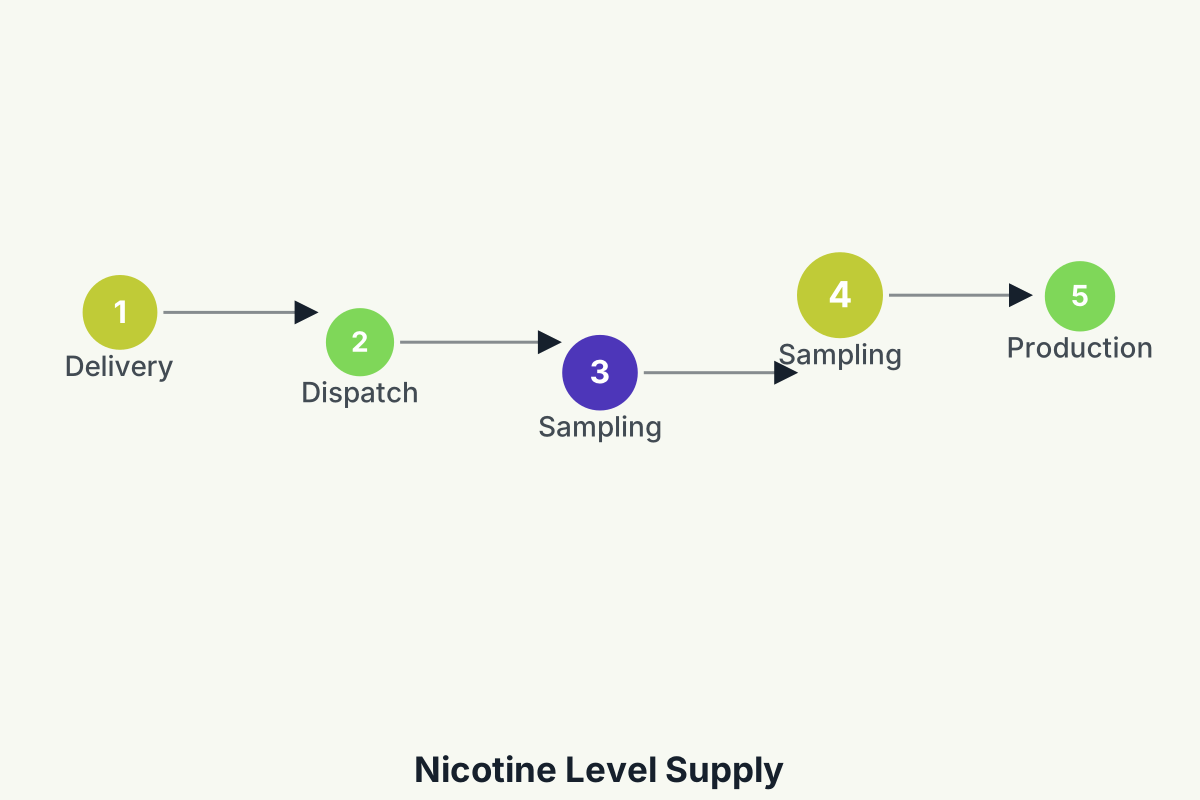
Inspection Before Dispatch
Random checks are fine, but weight the sample towards the start and end of a nicotine level production run. Those are where a line is most likely to drift.
- Keep sealed retained samples from every production batch.
- Write the complaint threshold into the order terms.
- Start with a mixed carton and let your own sell-through decide.
- Model landed cost, not ex-works price, when comparing quotes.
- Plan the switch from air to sea freight before you need it.
What to Fix Before Approving Nicotine Level
Revisit the nicotine level specification after every third order. Small improvements compound, and factories take a buyer more seriously when the document has clearly been used.
A written nicotine level specification should be short enough to read in a minute and precise enough to argue about. If a factory cannot confirm a number in writing, assume the number is whatever is cheapest that week.
| Product category | Accessory |
|---|---|
| Resistance band | 1.2 - 1.4 ohm |
| Capacity tolerance | +/- 3% |
| Puff count method | Machine cycle 2s on / 18s off |
| Master carton | 120 units |
| Carton weight | 11.5 kg |
| Shelf life | 12 months |
| Storage | 15-25 C, dry, away from direct light |
Practical Checklist
- Keep sealed retained samples from every production batch.
- Agree the tolerance band in writing before approving artwork.
- Plan the switch from air to sea freight before you need it.
- Model landed cost, not ex-works price, when comparing quotes.
- Ask how the factory measures puff count, then compare like with like.
- Rotate stock by batch code rather than by delivery date.
Frequently Asked Questions
What does a sample pack usually include?
A typical nicotine level sample pack covers the strengths or variants you are most likely to list, packed so you can evaluate them side by side. Tell us which lines you are considering and we will match the pack to that rather than sending a generic selection.
How are price changes handled on repeat orders?
{K} pricing is reviewed against input costs and volume rather than adjusted casually. Any change is confirmed in writing before the next order is scheduled, with the reason stated so you can judge it yourself.
What happens if my market changes its rules?
Regulations move, and packaging or documentation sometimes has to follow. We keep approved artwork files on hand so that a required change is a reprint rather than a redesign, which keeps the cost and delay down.
Can I visit the production facility?
Yes, and we encourage it for larger programmes. Visits are most useful when you already have a draft specification, because you can then check the specific processes behind the numbers you care about.
Do you provide compliance documents?
Every shipment leaves with the documentation set relevant to your market, including batch records and test reports where required. Your local rules still determine what you must file, so confirm those with your broker before import.
Next Step
If you are comparing options right now, send us the specification you have been quoted elsewhere. A side by side reading usually shows where the price difference actually comes from, and that is the most useful first conversation to have.
Related Reading
- Nicotine Level OEM and ODM: Which Model Fits Your Business — Latin America
- Nicotine Level Customer Education That Reduces Complaints — Convenience Retail
- Nicotine Level Shelf Life, Batch Codes and Traceability — Before Your Next Order
- Nicotine Level Chargeback Prevention for Retail Partners — Oceania
- Nicotine Level Warehouse Picking and Batch Rotation — 2026 Buyer Notes
- Seasonal Planning for Nicotine Level Inventory — Real Numbers Only