 VapeWholesaleHub
Nicotine Level Cost Breakdown: What You Are Really Paying For — Wholesale Clubs
Retailers rarely lose money on nicotine level because of price. They lose money because the first container was bought on a photograph. This page walks through what actually matters when you source nicotine level at scale, written from the buying desk rather than the marketing department.
Freight, Customs and Timing
Plan the nicotine level customs paperwork at the same time as the order, not when the goods are on the water. A missing document costs more in demurrage than the entire freight saving from a cheap forwarder.
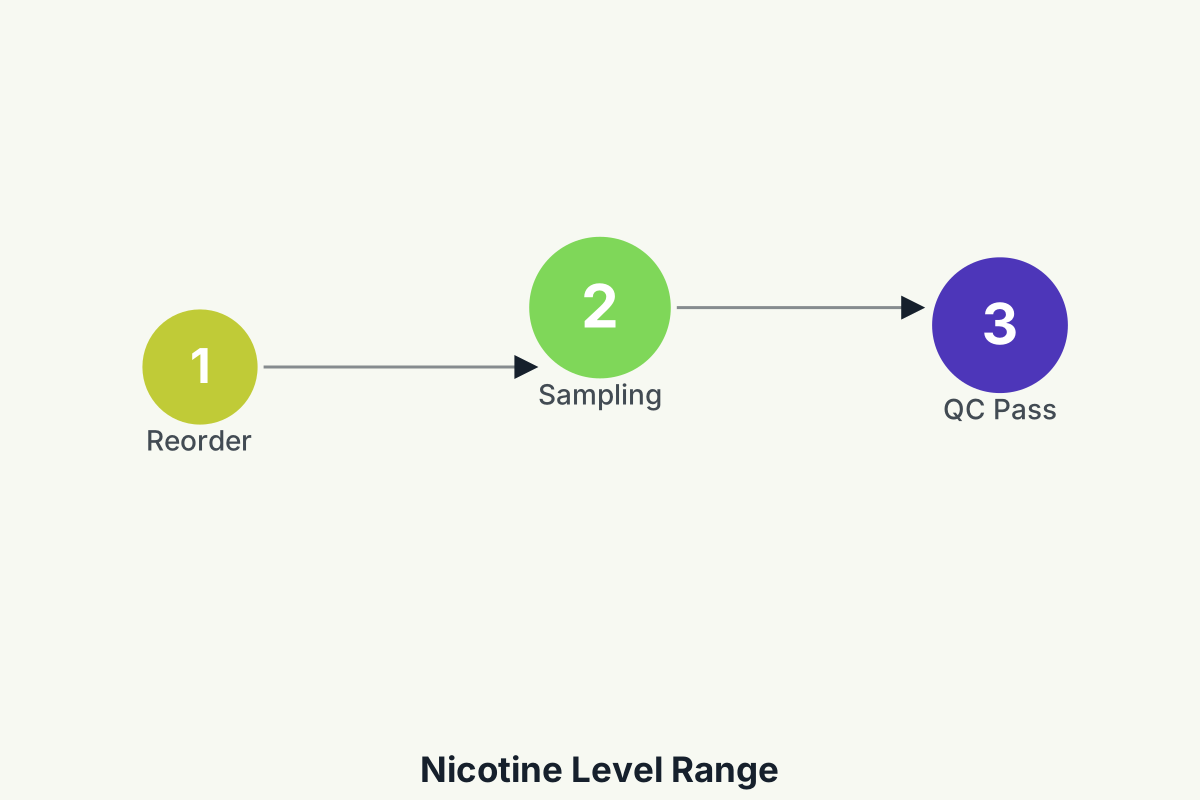
Selling Nicotine Level at Store Level
A nicotine level display that answers strength and flavour without staff involvement outsells a prettier one that does not. Most customers will not ask, so the fixture has to do the work.
On shelf, nicotine level sells on clarity. A plain shelf talker that states strength and flavour in two words outperforms a beautifully designed but vague display, because most purchase decisions here take under ten seconds.
Pricing and Margin
Watch the nicotine level price you pay over a year rather than per order. Factories respond well to visible volume, and a quarterly review is usually worth more than a hard negotiation each time.
Indicative reference points for planning purposes: entry tier from USD 1.86 per unit at 2000 units, mid tier at USD 1.59, and volume tier at USD 0.85 for full container quantities. These figures move with specification, packaging and freight, so treat them as a shape rather than a quote.
Quality Control in Practice
Incoming inspection for nicotine level is not about opening boxes at random. We weigh a sample of cartons, check batch codes against the production record, run a draw resistance measurement, and log the results so that a complaint three months later can be traced to a specific run.
Most defects in nicotine level are not dramatic. They are loose tolerances, a slightly thin seal, a mouthpiece that clicks. Left alone they turn into leak complaints, which are the single most common reason a retailer drops a line.
- Confirm the current customs classification with your own broker.
- Write the complaint threshold into the order terms.
- Ask how the factory measures puff count, then compare like with like.
- Plan the switch from air to sea freight before you need it.
- Rotate stock by batch code rather than by delivery date.
Where Nicotine Level Sits in the Range
Nicotine Level sits at an interesting point in the assortment. It is familiar enough to be an impulse purchase and specific enough to build a repeat pattern around. Treating it as either pure commodity or pure specialty both lead to poor results.
Category data for nicotine level is noisier than it looks. Promotions, weather and local competition all move weekly numbers, so read three months at a time rather than reacting to a single week.
Reading a Nicotine Level Spec Sheet
When we write a nicotine level specification with a distributor, we fix four things first: the resistance band, the liquid capacity tolerance, the puff count methodology and the packaging master carton. Everything else can flex without changing the customer experience.
| Product category | Pod system |
|---|---|
| Resistance band | 0.6 - 0.8 ohm |
| Capacity tolerance | +/- 5% |
| Puff count method | Declared by capacity |
| Master carton | 200 units |
| Carton weight | 3.8 kg |
| Shelf life | 12 months |
| Storage | 15-25 C, dry, away from direct light |
Practical Checklist
- Check carton dimensions against your freight quote before confirming.
- Start with a mixed carton and let your own sell-through decide.
- Agree the tolerance band in writing before approving artwork.
- Confirm the current customs classification with your own broker.
- Write the complaint threshold into the order terms.
- Plan the switch from air to sea freight before you need it.
Frequently Asked Questions
How long does a nicotine level order take to arrive?
Production typically takes ten to eighteen working days after artwork approval, and transit depends on the method you choose. Air express is fastest, sea freight is cheapest at volume. We confirm both at quotation so there is no surprise later.
What if a batch does not match the sample?
Keep the retained samples from the approval stage. If a delivered batch measurably differs, we compare against the retained set and resolve it against the production record. This is why we insist on sealed retained units from every run.
Can you match an existing product I already sell?
Often yes, provided we can measure it properly. Send a physical sample and we will report back on what can be matched, what will differ slightly, and why. An honest gap is more useful than a vague promise.
How are price changes handled on repeat orders?
{K} pricing is reviewed against input costs and volume rather than adjusted casually. Any change is confirmed in writing before the next order is scheduled, with the reason stated so you can judge it yourself.
Next Step
Questions that are not answered here are usually the interesting ones. Reach out with the specifics of your market and we will answer with numbers rather than adjectives.
Related Reading
- Digital Marketing Playbook for Nicotine Level Sellers — North America
- Nicotine Level Review Mining for Product Insight — 2026 Buyer Notes
- Certification Routes for Nicotine Level in Different Markets — Before Your Next Order
- Nicotine Level Customer Education That Reduces Complaints — Latin America
- Nicotine Level Quality Drift: Catching It Before Customers Do — Highly Regulated Markets
- Nicotine Level Pallet Configuration for Mixed Orders — Updated for 2026