 VapeWholesaleHub
Nicotine Level Cell and Chip Supply Constraints — Repeat Orders
Treat nicotine level as a repeat purchase category rather than a one off buy. That single change in framing alters almost every decision downstream, from carton size to how many strengths you list.
Positioning Nicotine Level on Your Shelf
Nicotine Level sits at an interesting point in the assortment. It is familiar enough to be an impulse purchase and specific enough to build a repeat pattern around. Treating it as either pure commodity or pure specialty both lead to poor results.
Pricing and Margin
Hold a small nicotine level buffer in your pricing model for currency movement. A few percent on a container is a real number, and it is easier to plan for than to absorb.
Tiered pricing works best when the tiers match real customer behaviour. Most nicotine level buyers will take the second tier if the step is modest and the third tier only if they can see a genuine reason to hold more stock.
Indicative reference points for planning purposes: entry tier from USD 1.92 per unit at 500 units, mid tier at USD 1.42, and volume tier at USD 1.38 for full container quantities. These figures move with specification, packaging and freight, so treat them as a shape rather than a quote.
Logistics That Protect Margin
Plan the nicotine level customs paperwork at the same time as the order, not when the goods are on the water. A missing document costs more in demurrage than the entire freight saving from a cheap forwarder.
Quality Control in Practice
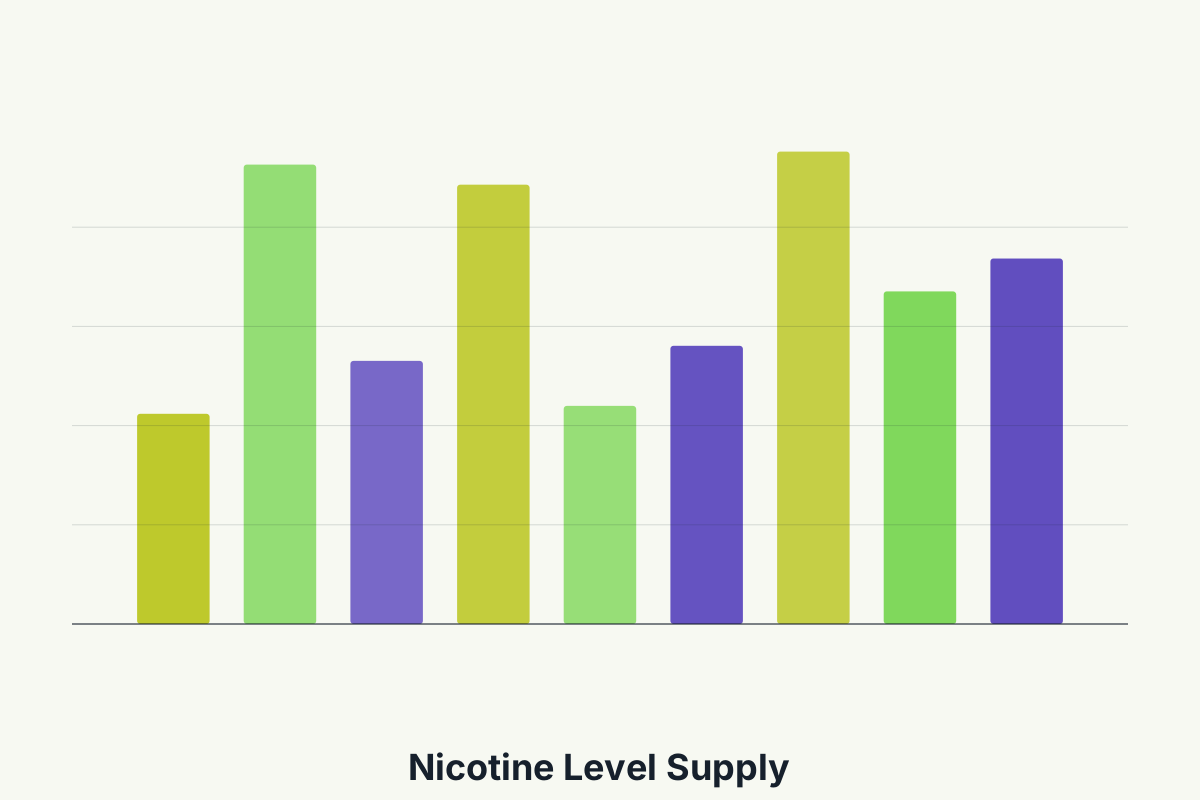
Random checks are fine, but weight the sample towards the start and end of a nicotine level production run. Those are where a line is most likely to drift.
- Write the complaint threshold into the order terms.
- Keep sealed retained samples from every production batch.
- Model landed cost, not ex-works price, when comparing quotes.
- Ask how the factory measures puff count, then compare like with like.
- Check carton dimensions against your freight quote before confirming.
Selling Nicotine Level at Store Level
Staff knowledge moves nicotine level more than any fixture. A two minute explanation of the difference between this line and the one next to it converts a browsing shopper into a repeat buyer far more reliably than a discount.
Staff knowledge moves nicotine level more than any fixture. A two minute explanation of the difference between this line and the one next to it converts a browsing shopper into a repeat buyer far more reliably than a discount.
The Specification That Matters
Pay attention to how a nicotine level supplier responds when you ask for a tolerance they do not want to commit to. The hesitation is usually more informative than the eventual answer.
When we write a nicotine level specification with a distributor, we fix four things first: the resistance band, the liquid capacity tolerance, the puff count methodology and the packaging master carton. Everything else can flex without changing the customer experience.
| Product category | Accessory |
|---|---|
| Resistance band | 0.8 - 1.0 ohm |
| Capacity tolerance | +/- 2% |
| Puff count method | Declared by capacity |
| Master carton | 300 units |
| Carton weight | 3.4 kg |
| Shelf life | 18 months |
| Storage | 15-25 C, dry, away from direct light |
Practical Checklist
- Model landed cost, not ex-works price, when comparing quotes.
- Rotate stock by batch code rather than by delivery date.
- Plan the switch from air to sea freight before you need it.
- Start with a mixed carton and let your own sell-through decide.
- Confirm the current customs classification with your own broker.
- Keep sealed retained samples from every production batch.
Frequently Asked Questions
Can I visit the production facility?
Yes, and we encourage it for larger programmes. Visits are most useful when you already have a draft specification, because you can then check the specific processes behind the numbers you care about.
Can I mix strengths in one order?
In most cases yes, as long as each strength meets the minimum run length. Mixed strength cartons are popular with retailers building their first display because they show the full ladder without over committing.
Can you match an existing product I already sell?
Often yes, provided we can measure it properly. Send a physical sample and we will report back on what can be matched, what will differ slightly, and why. An honest gap is more useful than a vague promise.
Do you hold stock for regular customers?
For established programmes we can reserve production slots and, in some cases, hold finished nicotine level stock against a forecast. It removes most of the lead time risk from a reorder and is worth discussing once volumes are stable.
Next Step
Questions that are not answered here are usually the interesting ones. Reach out with the specifics of your market and we will answer with numbers rather than adjectives.
Related Reading
- Nicotine Level Inventory Turnover Benchmarks for Stores — Multi-Warehouse Networks
- Comparing Nicotine Level Factory Tiers and What You Get — High Volume Buyers
- Nicotine Level Warehouse Picking and Batch Rotation — Cash-and-Carry Formats
- Nicotine Level Negotiation Timing Through the Production Year — Premium Shelf Programmes
- Supplier Audit Checklist for Nicotine Level Orders — Freight Included
- Nicotine Level Cost Breakdown: What You Are Really Paying For — Private Label Programmes