 VapeWholesaleHub
Nicotine Level Benchmarking Two Factories Side by Side — EU Markets
The most expensive nicotine level mistake is not paying too much per unit. It is discovering after three months that the line cannot be reordered to the same standard. Consistency is the actual product.
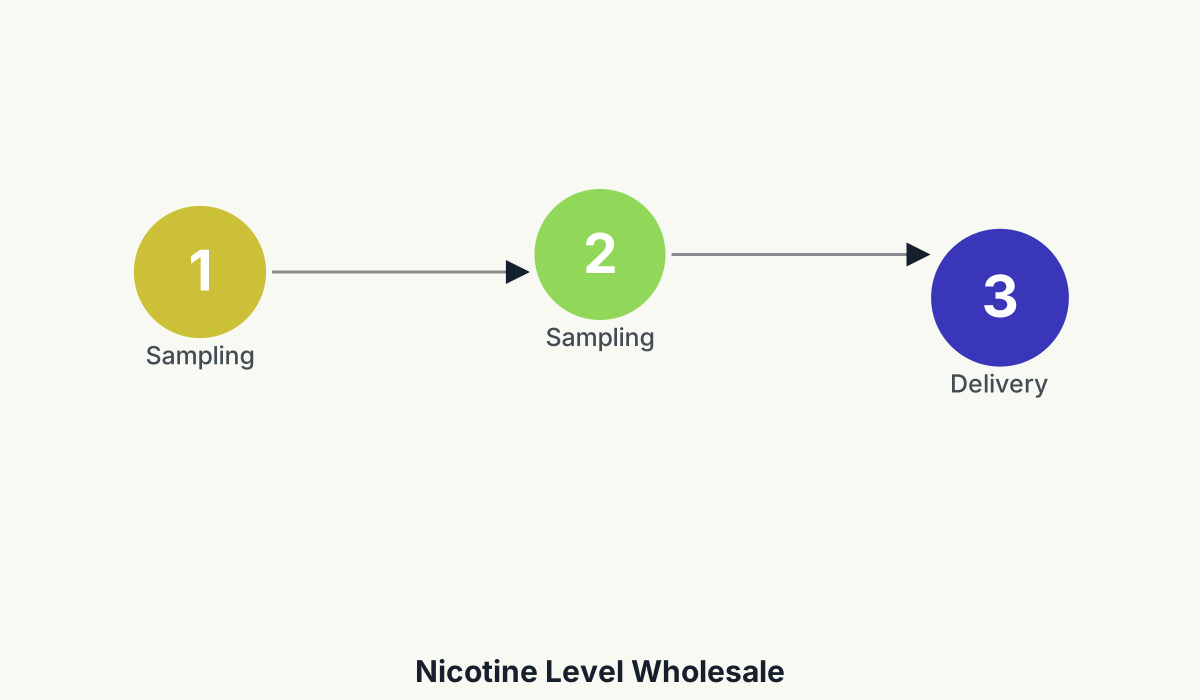
What to Fix Before Approving Nicotine Level
Good nicotine level specs describe the failure boundaries, not just the target. Stating what is unacceptable gives the factory a clear production window instead of a single point they will miss half the time.
| Product category | Closed pod |
|---|---|
| Resistance band | 0.8 - 1.0 ohm |
| Capacity tolerance | +/- 5% |
| Puff count method | Machine cycle 3s on / 27s off |
| Master carton | 300 units |
| Carton weight | 8.1 kg |
| Shelf life | 12 months |
| Storage | 15-25 C, dry, away from direct light |
Where Demand Is Heading
One shift worth planning for: shorter nicotine level reorder cycles with smaller average drops. It favours suppliers with flexible production slots over those who only want large annual commitments.
Quality Control in Practice
Keep a photo record of every nicotine level approval sample. Written descriptions age badly; a dated photograph next to a delivered unit settles most arguments in seconds.
- Write the complaint threshold into the order terms.
- Confirm the current customs classification with your own broker.
- Ask how the factory measures puff count, then compare like with like.
- Rotate stock by batch code rather than by delivery date.
- Model landed cost, not ex-works price, when comparing quotes.
What Nicotine Level Really Costs Landed
Compare nicotine level quotes on the same incoterm. A price that looks better because it excludes a cost you assumed was included is not a saving at all.
Build nicotine level price tiers around order sizes your customers actually place. Tiers that only make sense on a spreadsheet get ignored, and you end up discounting ad hoc instead.
Indicative reference points for planning purposes: entry tier from USD 1.42 per unit at 500 units, mid tier at USD 1.87, and volume tier at USD 0.74 for full container quantities. These figures move with specification, packaging and freight, so treat them as a shape rather than a quote.
Positioning Nicotine Level on Your Shelf
Nicotine Level rewards retailers who can explain it in one sentence. If your team needs a paragraph, the range is too complicated for the space it occupies.
Category planning for nicotine level works best when you map it against three shopper types: the restocker who already knows what they want, the switcher who wants something stronger, and the explorer who buys on flavour name alone.
Logistics That Protect Margin
Carton dimensions for nicotine level are a design decision, not a packing afterthought. A few centimetres on the master carton can change how many units fit a pallet, and that repeats on every order.
Track nicotine level landed cost per unit as a running number, including duty and local delivery. It is the only figure that tells you whether a supplier change actually improved anything.

Practical Checklist
- Plan the switch from air to sea freight before you need it.
- Agree the tolerance band in writing before approving artwork.
- Confirm the current customs classification with your own broker.
- Check carton dimensions against your freight quote before confirming.
- Keep sealed retained samples from every production batch.
- Start with a mixed carton and let your own sell-through decide.
Frequently Asked Questions
Do you hold stock for regular customers?
For established programmes we can reserve production slots and, in some cases, hold finished nicotine level stock against a forecast. It removes most of the lead time risk from a reorder and is worth discussing once volumes are stable.
Can I mix strengths in one order?
In most cases yes, as long as each strength meets the minimum run length. Mixed strength cartons are popular with retailers building their first display because they show the full ladder without over committing.
How are price changes handled on repeat orders?
{K} pricing is reviewed against input costs and volume rather than adjusted casually. Any change is confirmed in writing before the next order is scheduled, with the reason stated so you can judge it yourself.
Can you match an existing product I already sell?
Often yes, provided we can measure it properly. Send a physical sample and we will report back on what can be matched, what will differ slightly, and why. An honest gap is more useful than a vague promise.
What information do you need to quote?
Target specification, approximate quantity, destination and any packaging requirement. With those four we can usually come back with a costed option the same working day rather than a request for more information.
Next Step
Start smaller than feels comfortable, measure honestly, then scale what worked. That sequence has saved more of our customers money than any negotiation tactic we could suggest.
Related Reading
- Nicotine Level Buyer FAQ for First Time Importers — Updated for 2026
- Nicotine Level KPI Set for Wholesale Operations — Low Minimum Quantities
- Nicotine Level Promotional Mechanics That Do Not Erode Value — Container-Scale Orders
- Nicotine Level Sampling Programme: How to Evaluate Before You Commit — Highly Regulated Markets
- What a Nicotine Level Production Slot Really Means — Updated for 2026
- Nicotine Level Cross Selling With Adjacent Categories — North America